Protect Your HVAC System from Wildfire Smoke: A Guide for Washington Summers
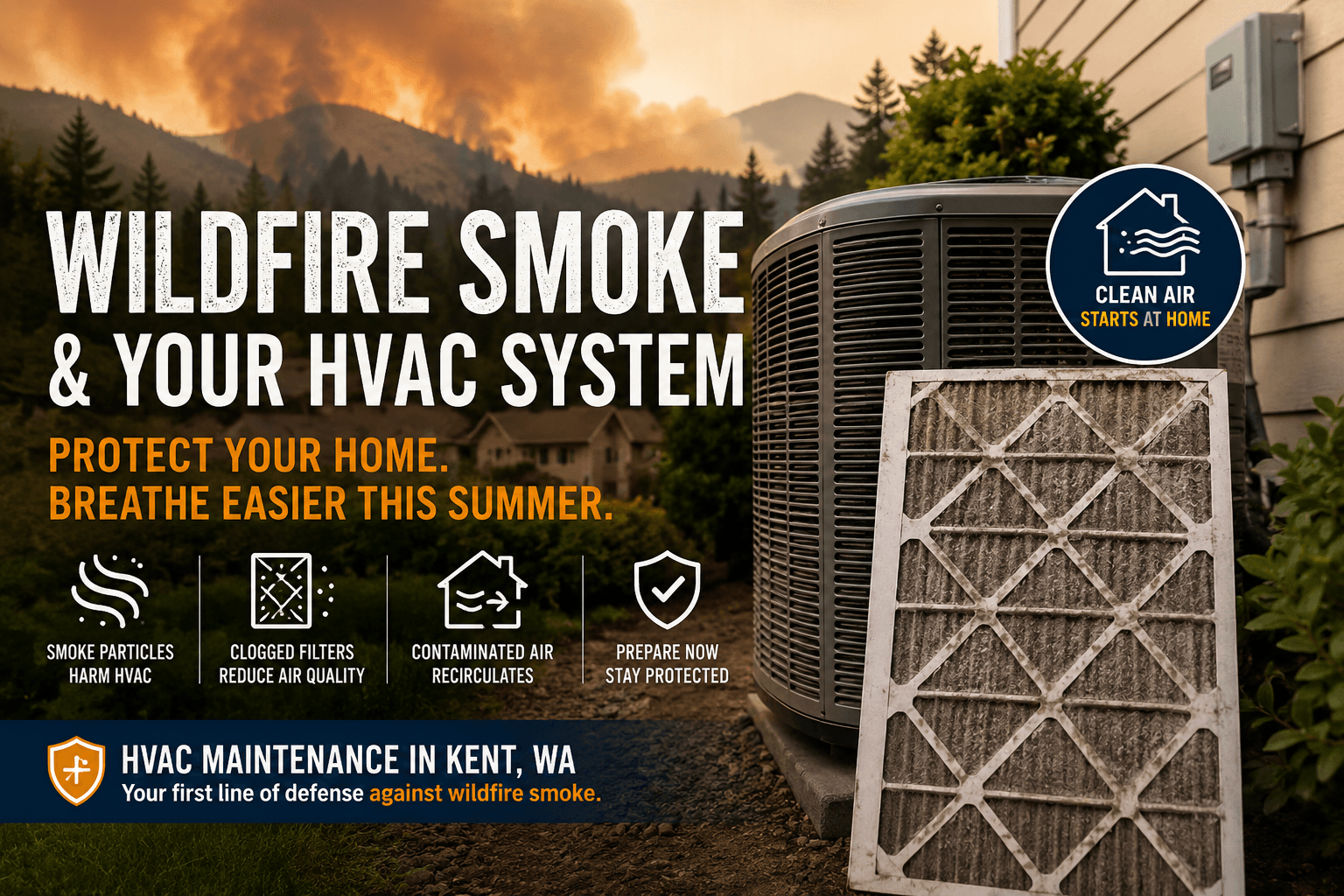
Wildfire smoke has become a recurring concern in Washington summers, with thousands of acres burning every year. Preparation for homeowners across this region is more important now than ever. Routine HVAC maintenance in Kent, WA, is essential, as smoke particles place extra strain on your system and can easily damage it.
So, as smoke rolls in, the main concern shifts from outdoor activities to the air inside. It keeps circulating from the ducts and vents, affecting the air your family breathes every day. The HVAC filter becomes the first line of defence. At ANP Heating and A/C, we see the aftermath every summer in filters, coils, and systems that were left unprepared.
How Wildfire Smoke Affects Your HVAC System
To protect indoor air quality in Kent, WA and reduce the impact of wildfire smoke, we first need to understand the threat itself. Wildfire smoke contains PM2.5 particles, which are small enough to bypass any standard HVAC filter.
Once inside, here is what happens:
Coil Coating
The evaporator coil gets coated in smoke particles, which reduces its ability to transfer cool air and heat efficiently.
Filter Clogging
During heavy smoke events, filters can clog within days rather than the typical 30 to 90 days.
Duct Contamination
The small particles start settling into ductwork and keep recirculating throughout your home, even after the outdoor quality improves.
Silent System Strain
The damage builds up quietly, forcing your HVAC system to work harder and causing components to wear out faster than in normal seasonal use.
What You Can Actually Do: Smoke Season Readiness Checklist
Upgrade to MERV 13 Filter
Upgrade your filter before the season begins, as standard filters do not capture PM2.5 particles. This means you are not scrambling at the last minute when the air quality drops.
Confirm Filter Compatibility with Your System First
Not every standard residential HVAC unit can handle a high-rated MERV 13. A professional check before switching will save you from bigger problems later on.
Replace Filters Every Two to Three Weeks During Active Smoke Events
Filters clog up at a much faster pace during heavy smoke as compared to the standard monthly schedule. Staying on top of replacements is the most effective step you can take.
Close Fresh Air Intake Dampers when Air Quality is Poor
You need to make sure that your home air is running in a closed loop and filtering the air already inside. If your system has a fresh air intake, close it during periods of poor Air Quality Index (AQI) to reduce smoke infiltration.
Seal Gaps Around Windows, Doors, and Utility Entry Points
Smoke can travel through any unsealed gap and can bypass your filtration entirely. Basic weatherstripping and gap sealing make the HVAC system more efficient.
Schedule a Professional Duct Inspection Annually
Smoke residue from previous seasons accumulates in ductwork and keeps recirculating until it is physically removed. An inspection catches what filters cannot.
When to Call ANP Heating and A/C
If you are unsure which filter your system requires or whether smoke residue has accumulated in your ductwork from previous seasons, schedule an inspection before smoke season arrives rather than waiting until air quality declines.
ANP Heating and A/C LLC provides full HVAC maintenance and inspection in Kent, WA, including:
- Filter assessment and replacement recommendations
- Evaporator coil cleaning
- Duct inspection for smoke residue
- Full system performance check
- 24/7 emergency service
Contact ANP Heating and A/C today to schedule your HVAC maintenance in Kent, WA and ensure your system is ready before wildfire smoke season arrives.